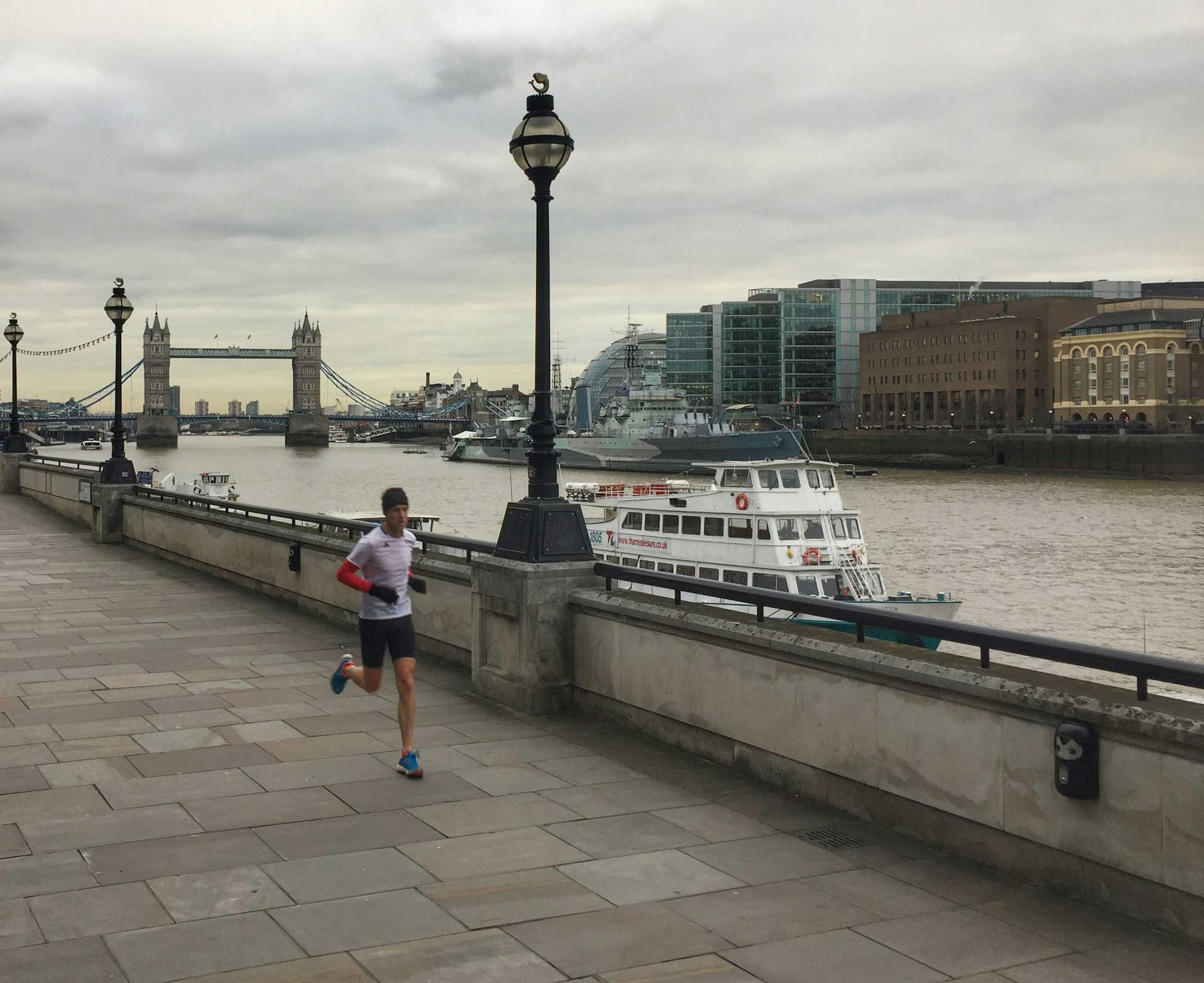
Take the same running route at different times of day.
You'll feel the difference immediately.
The 6am vs. 8:30am Test
A run at 6am feels crisp. Your lungs expand. You feel energised. Breathing is easy.
The same route at 8:30am—peak commute hour—feels completely different. The air feels heavy. Your chest tightens. You're breathing harder than usual, and not just from exertion.
Most runners assume they're just tired. Or that they're getting fitter (so harder breathing means harder work).
They're not thinking about air quality.
But that's exactly what's changed.
What the Data Shows
Here's a realistic timeline of air quality change during a London day:
6:00-7:00am
AQI: 45-60 (Good to Moderate)
What's happening: Rush hour hasn't started. Pollution is building but hasn't peaked. Wind is minimal. City is relatively quiet.
7:30-9:30am
AQI: 85-120 (Unhealthy for Sensitive Groups)
What's happening: Peak commute. 300,000+ vehicles moving through central London. Schools runs. Bus routes. Taxis. Everything.
12:00-2:00pm
AQI: 60-85 (Moderate)
What's happening: Midday lull. Traffic eases slightly. More wind. Pollution disperses.
2:00-6:00pm
AQI: 100-150+ (Unhealthy)
What's happening: Secondary peak from ground-level ozone formation (heat + sunlight + emissions). Afternoon traffic builds again. This is the worst period of the day for air quality.
6:00-9:00pm
AQI: 70-90 (Moderate to Unhealthy for Sensitive Groups)
What's happening: Sunset ends ozone formation. Traffic begins easing. Gradual improvement.
10pm onwards
AQI: 40-70 (Good to Moderate)
What's happening: Night air. Minimal traffic. Pollution disperses in cooler evening.
Notice the pattern? There are good running times and bad running times. Not based on how you feel. Based on data.
Route Quality Matters More Than Distance
But time isn't the only variable. Location changes everything.
Consider these hypothetical runs, all 10km in London:
Route A: Thames-Side Path
Largely away from major roads
Consistent AQI: 40-60 across the run
Exposed to wind (disperses pollution)
Cleanest option
Route B: Residential Areas
Minor roads, quiet streets
AQI: 50-80 depending on proximity to main roads
Some traffic exposure but not constant
Moderate option
Route C: Major Road Corridor (Tottenham Court Road)
Parallel to constant traffic
AQI: 90-150 immediately next to road, 70-100 across the run
High exposure for entire duration
Worst option
You could run 10km through 3-4 different air quality zones depending on your route.
Most runners never think about this. They choose routes based on:
Convenience
Distance
Scenery
Flatness/difficulty
Not based on: where the clean air actually is.
The Intersection: Time + Route
The best running strategy isn't just "run early" or "avoid main roads."
It's both.
An early morning run on a Thames-side path is dramatically different from an afternoon run on a major traffic corridor.
The former might expose you to cumulative AQI of 400-600 over the run. The latter might expose you to 900-1500.
For a regular runner, that's the difference between sustainable training and chronic inflammation.
What People Notice When They Learn This
Once runners start paying attention to air quality data, they report:
Better performance on clean air days (it's not just in their head)
Faster recovery (less inflammation to recover from)
More enjoyment (breathing difficulty decreases)
Understanding of why some days feel harder (not fitness loss; it's pollution)
Strategic optimization (they plan routes and times deliberately)
They're not restricting their training. They're optimizing it.
The Sensitive Group Problem
For people with asthma, heart disease, or respiratory conditions, this becomes critical, not optional.
A 90-minute run on a bad air day in a traffic corridor could trigger:
Asthma attacks
Chest pain
Elevated heart rate (stress response to low oxygen)
Inflammation lasting days
These aren't hypothetical. They're real health events.
But most people with these conditions aren't given air quality guidance. They're just told "exercise is good for you" without context.
The truth is more nuanced: exercise in clean air is good. Exercise in polluted air is a stressor.
What You Should Do
Start tracking air quality before you run.
Check the AQI in your area
Check forecast pollution levels
Know which routes have lower traffic exposure
Adjust timing based on data
Pick runs strategically:
Early morning (6-8am) beats afternoon (2-4pm)
Weekday runs during off-peak hours beat morning commute
Routes away from major roads beat traffic corridors
Windy days beat still days
Rainy days beat dry days
Listen to air quality alerts.
When your city issues an air quality warning (typically for ozone in summer), it's not a suggestion. Reduce intensity. Shorten duration. Or shift to indoor training.
This isn't paranoia. It's smart training.
The Bigger Picture
Here's what's interesting: this data applies to more than running.
Cyclists notice it. Walkers notice it. People who commute outdoors notice it. Parents pushing strollers notice it.
Once you understand air quality patterns, you make better choices across your entire day.
You don't just run smarter. You live smarter.
Learn more: Track real-time air quality and plan your outdoor activities around clean air windows.
Latest Insights


Be Part Of The Change
Get The Sensor
We’re giving back to the community back contributing 30% of our revenue supports research initiatives; 15% allocated for token buyback and burning to enhance value; and 5% funds grants for outstanding research reports.